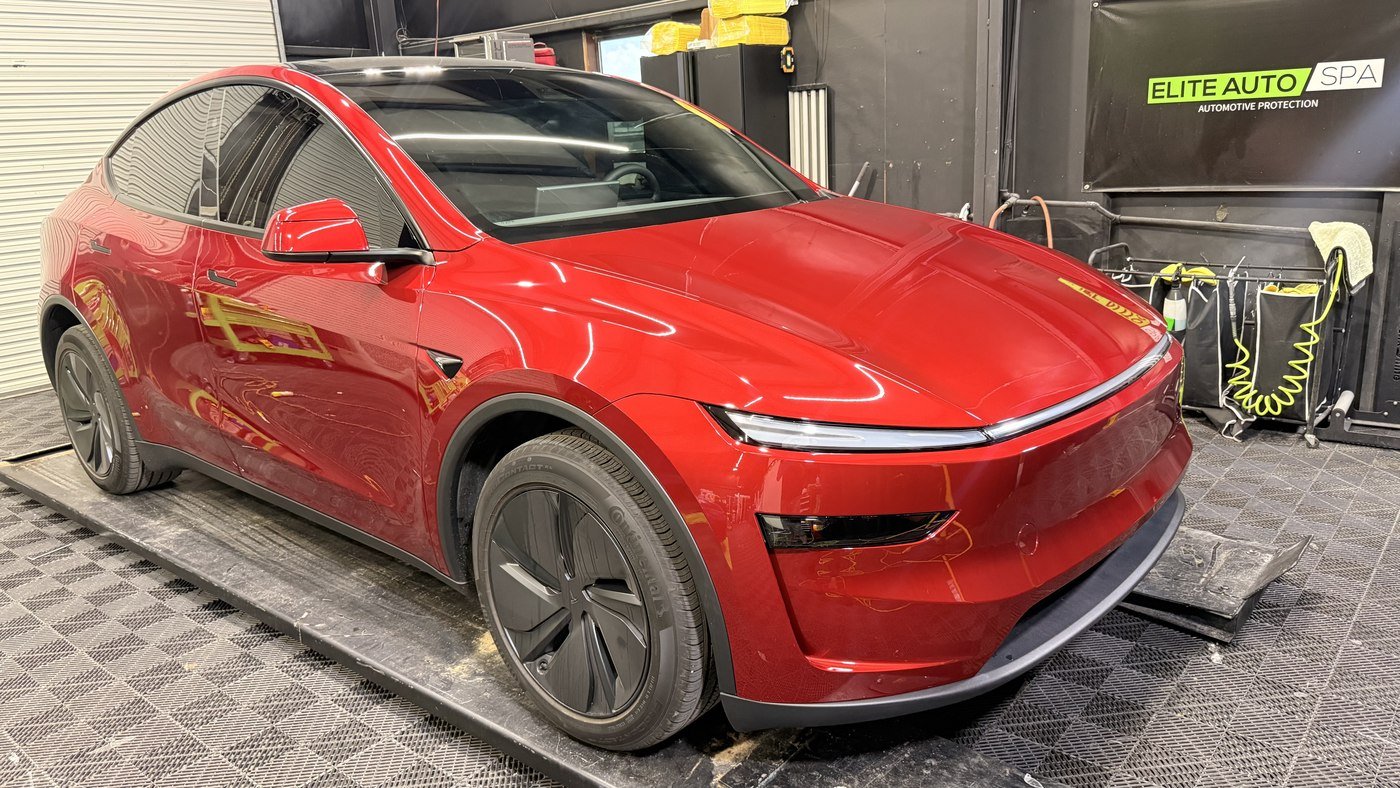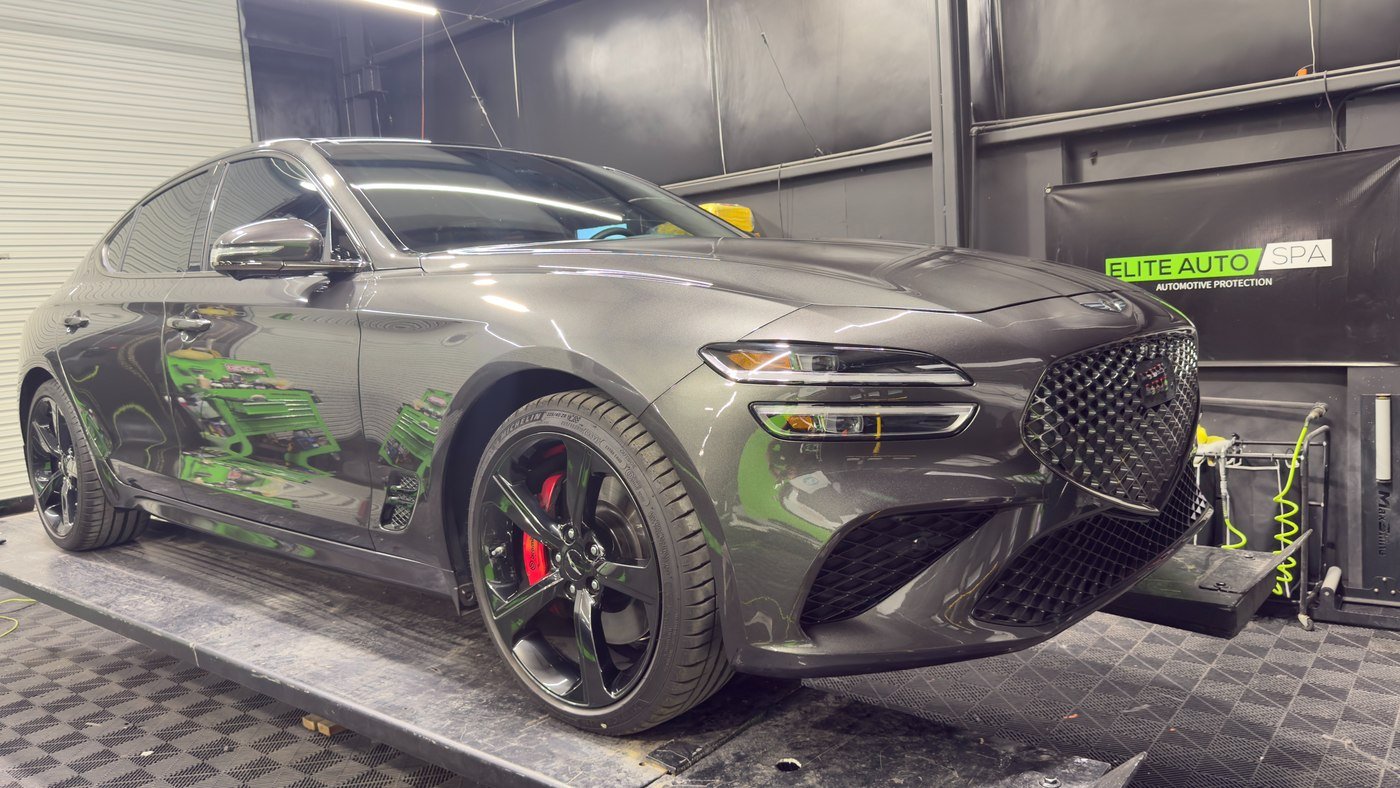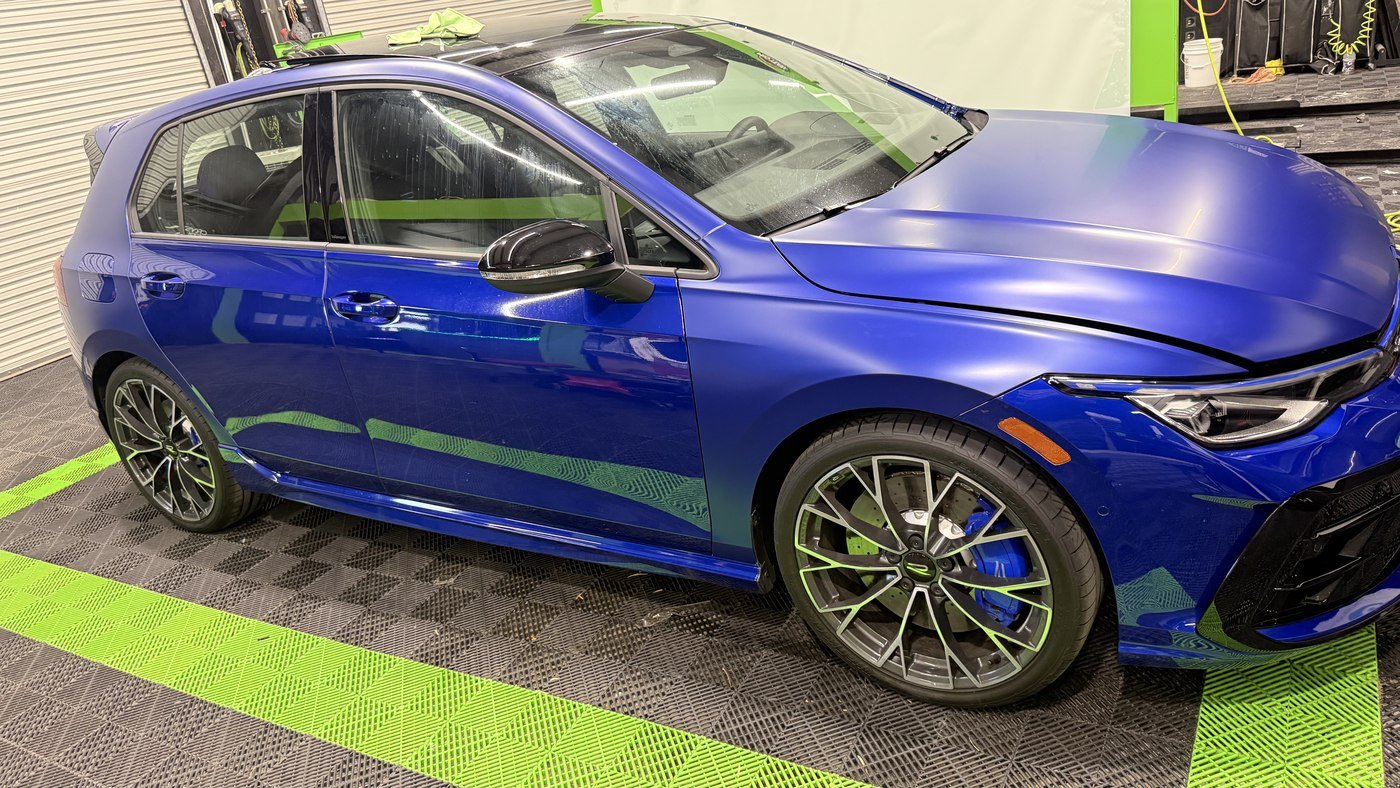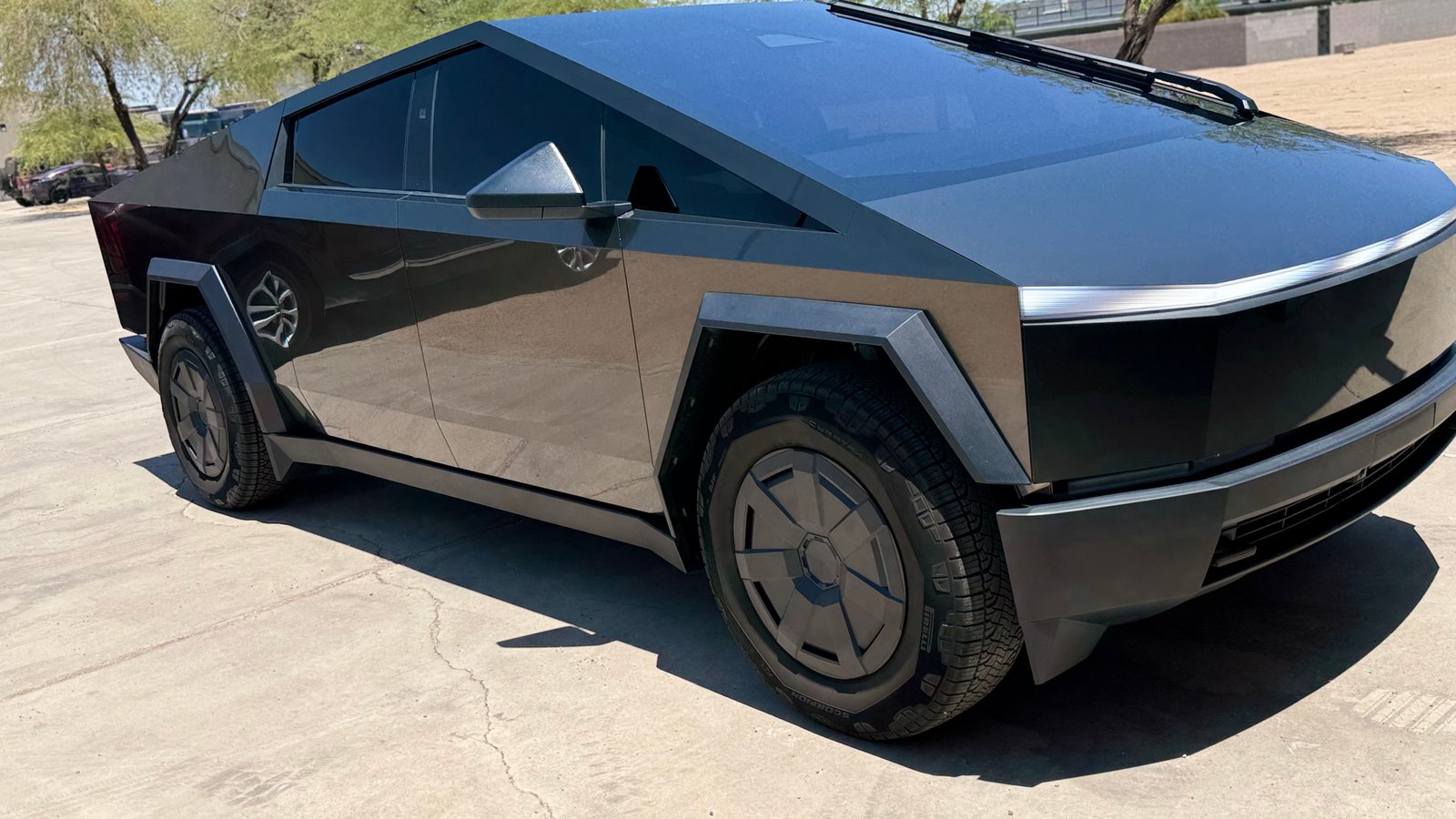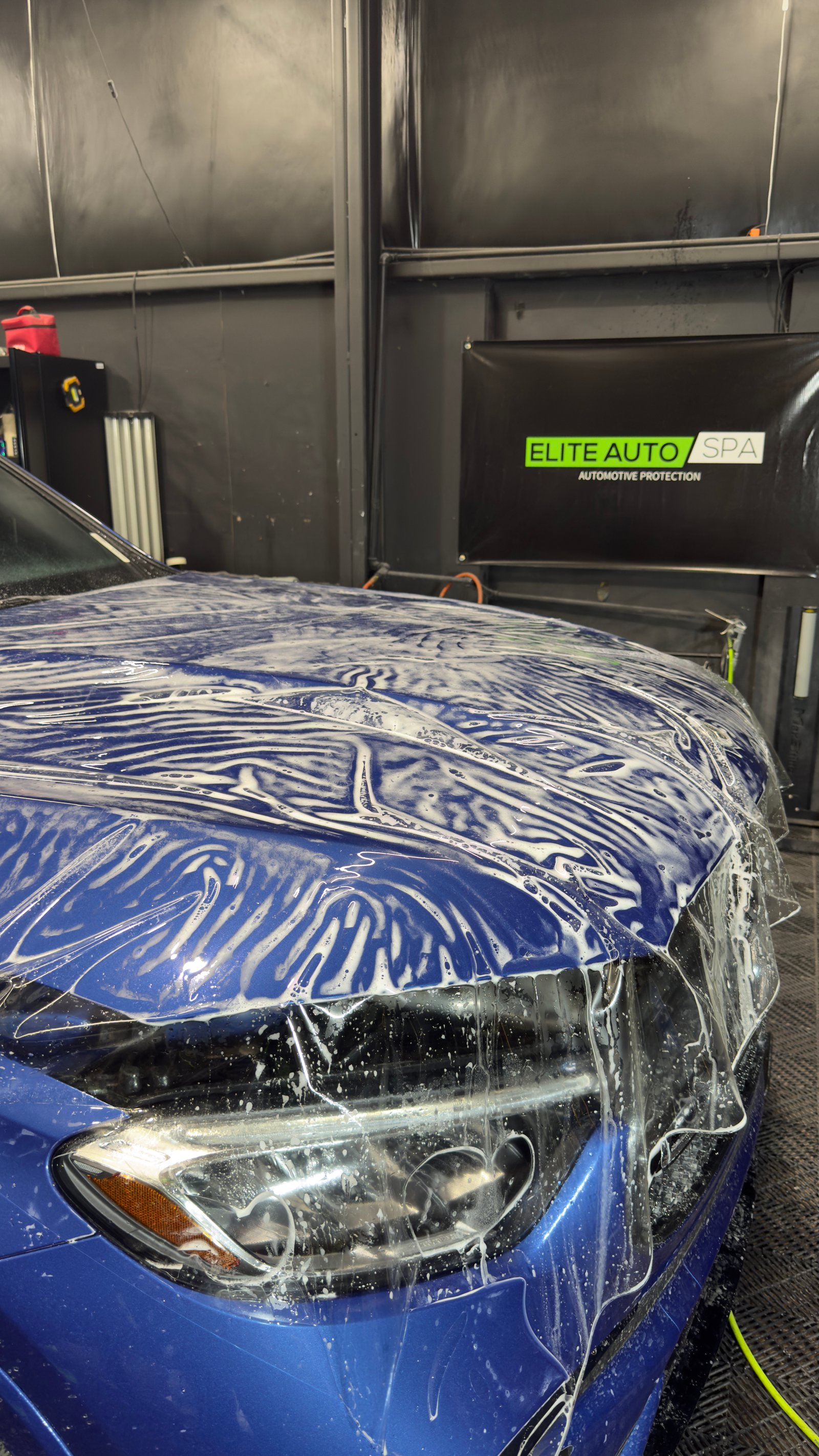
Arizona highways are loose gravel nine months of the year. Film is the only thing that puts a physical barrier between that and your factory paint — computer-cut and installed in a climate-controlled shop, with Tyler on every install.
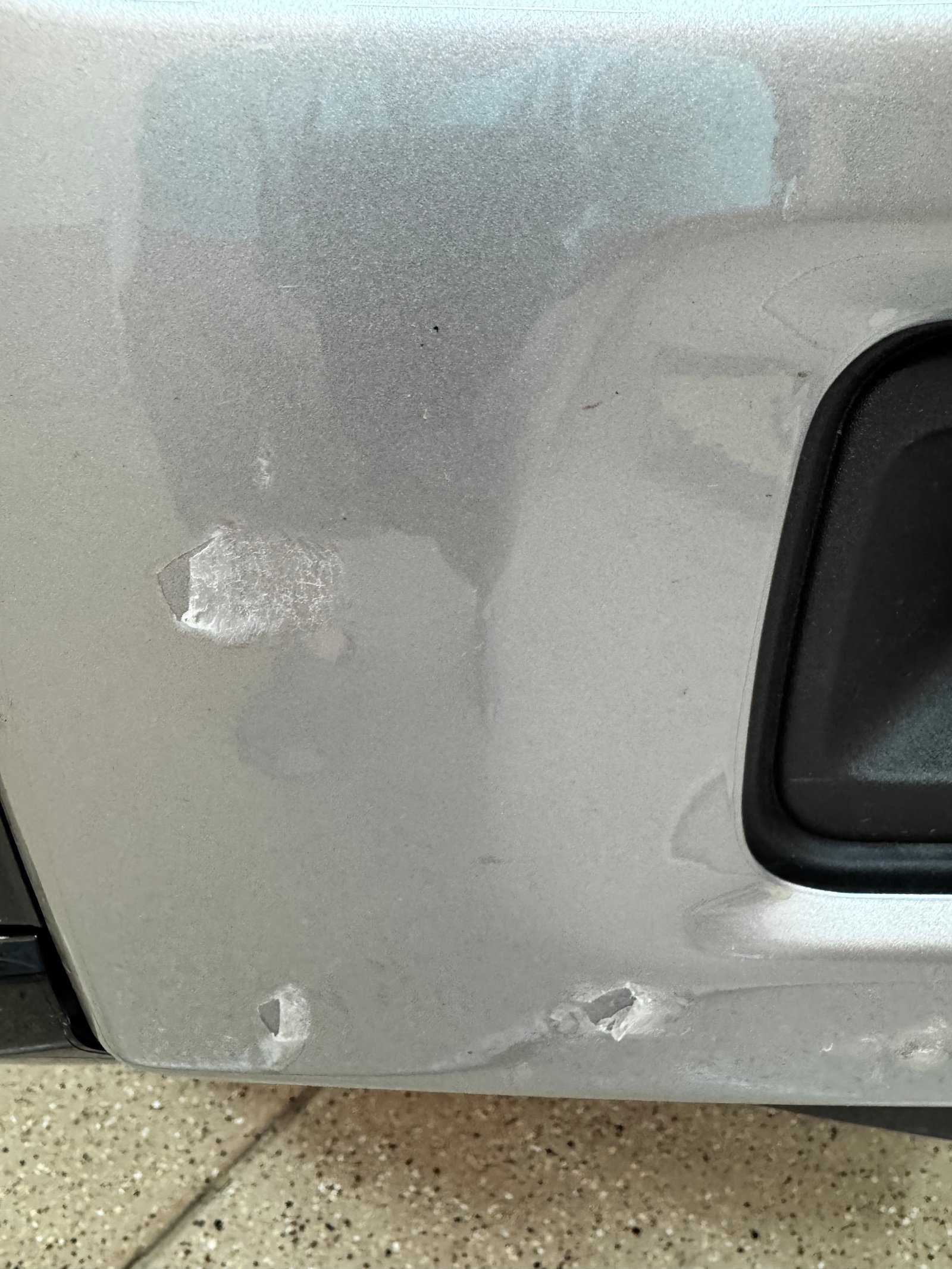
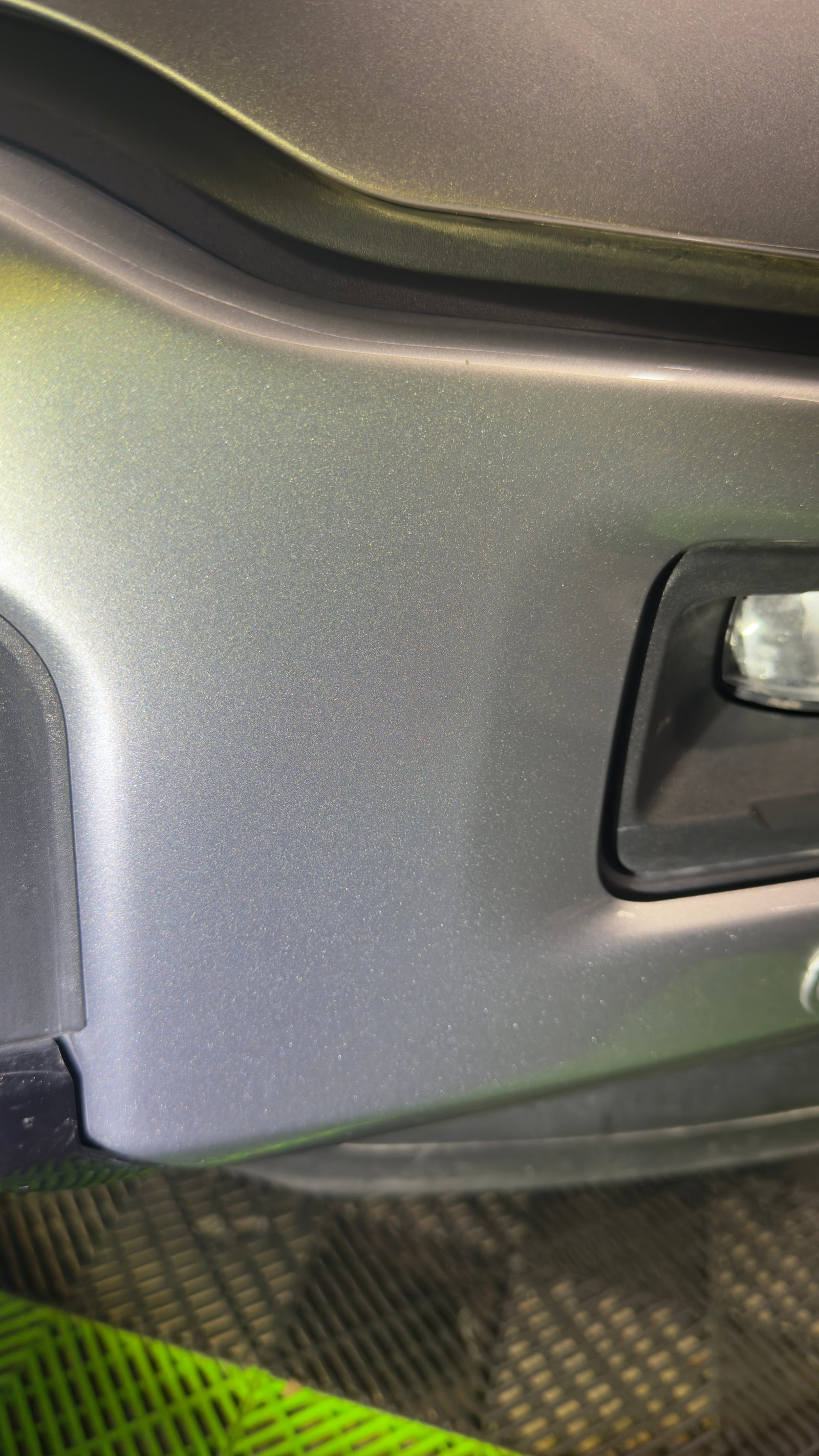
Highway debris, straight into the front end. Drag the slider — left is the film after impact, right is the paint underneath once it was peeled back.
Film — after impact
Paint — untouched
Without film that's a body shop bill, a repaint, and a permanent Carfax entry for non-factory paint. With film it was a section replacement and back on the road the same week.
A coating is a few microns of hardened liquid. It handles UV, chemicals and washing beautifully, and it will do nothing at all about a stone off a gravel truck.
Around eight thousandths of an inch of urethane between the road and your paint. It absorbs impact instead of transmitting it, which is a different job from anything a coating does.
Light scratches and wash swirls in the top coat disappear with heat. Arizona sun does it unassisted; warm water speeds it up.
And a repaint goes on the vehicle's history permanently. Non-factory paint reads as accident damage to any buyer running a report, whether or not it was.
Film is removable. Years later it peels away and the paint underneath is exactly as it was the day it was fitted.
Three levels, all in GSWF Defender Platinum with its lifetime manufacturer warranty. These are starting prices. Large trucks, complicated bumpers and exotics take longer and are quoted individually.
| Package | Sedan · from | SUV · from | Truck · from |
|---|---|---|---|
| Partial FrontBumper, leading edge of the hood, mirrors. The panels that take the most hits, at the lowest entry point. | $900 | $950 | $1,000 |
| Full FrontFull bumper, full hood, both fenders and mirrors. No line across the hood, nothing left exposed. What most people choose. | $1,700 | $1,900 | $2,000 |
| Full BodyEvery painted panel, front to back. Rockers, doors, quarters, roof. For a vehicle you intend to keep. | $5,500 | $6,000 | $6,500 |
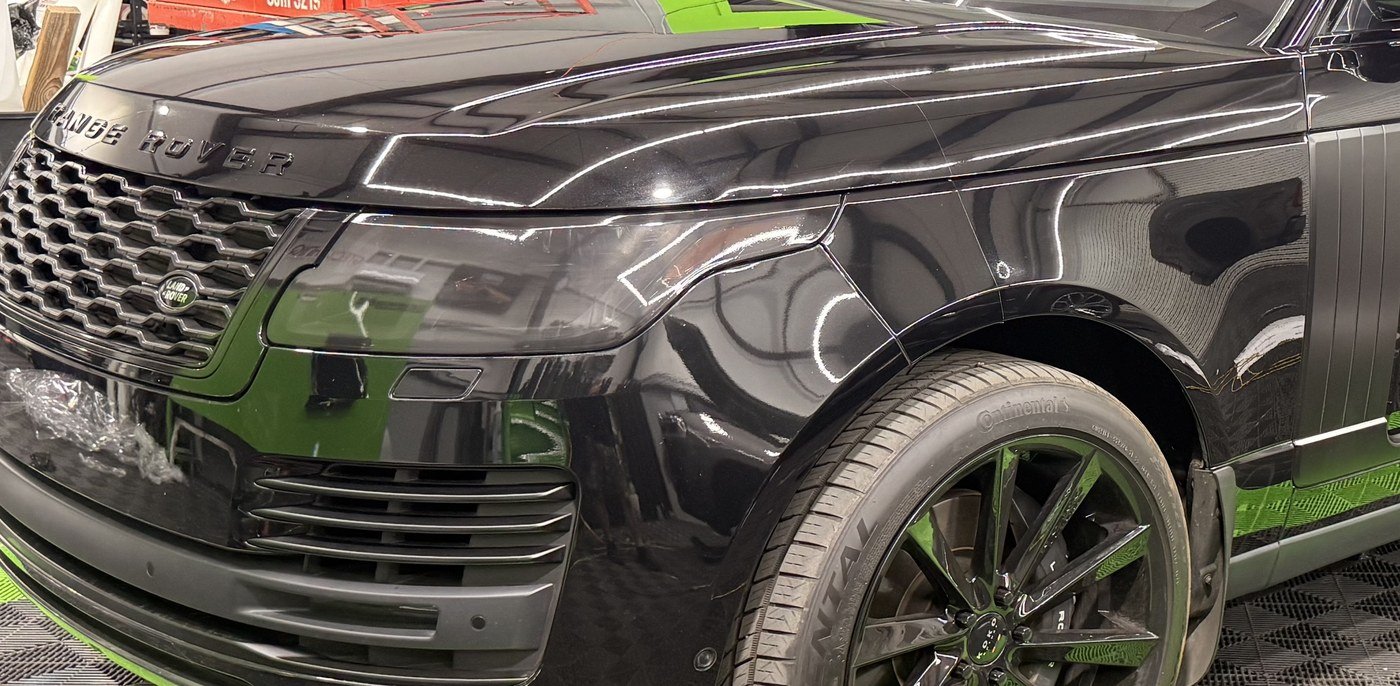
Look at the Range Rover above — there's a film edge across the hood where the coverage stops. Nearly invisible on most colors and completely fine, but if it would bother you, full front is the answer. Better to decide that now than notice it later.
Film and coating do different jobs, and most people end up with both. Coating over film adds gloss and makes it far easier to keep clean. Ceramic pricing here.
Nothing is quoted off a list. We look at the vehicle, tell you which coverage actually suits how you drive it, and say so when the cheaper option is plenty.
Military, veterans, police, fire, EMS and seniors. Mention it when you get in touch.
All GSWF Defender Platinum with the same lifetime warranty. The difference is what it does to how the vehicle looks.
Invisible, and up to 45% more gloss than bare clear coat. The vehicle looks like it did the day it was delivered, only wetter.
Turns gloss paint matte without paint or vinyl. Flat, even, and it comes off whenever you want the shine back. Runs about 10% above gloss.
SVG colored film is protection film, not wrap. Real chip protection in the same layer that changes the color, with factory paint sealed underneath.
Satin runs about 10% above the prices above. Colored film is quoted separately — ask for a color quote.

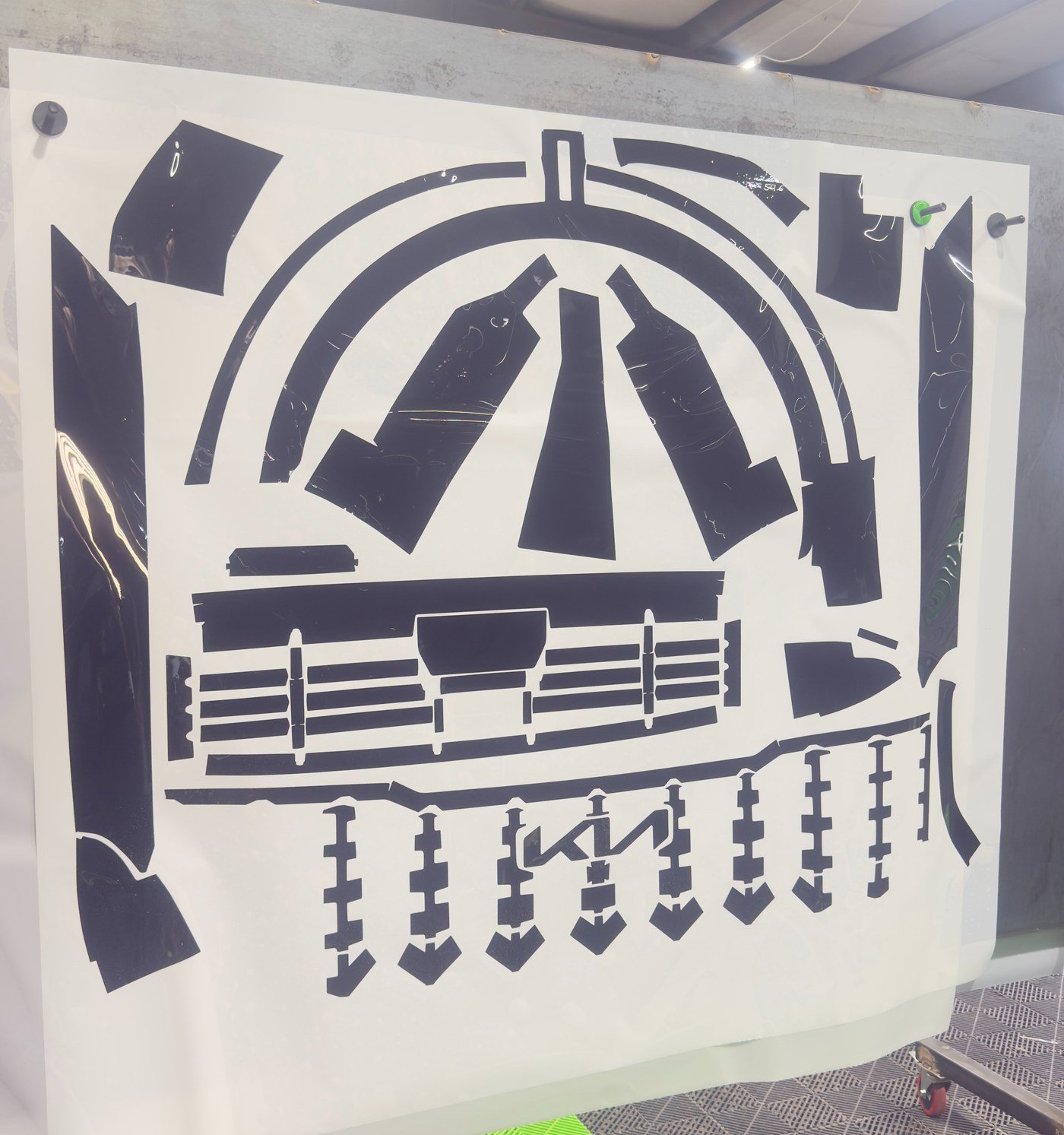
Not a front end. Not even a bumper. That whole sheet is the trim and accent pieces around one bumper — every grille slat cut separately, each vent surround, each insert. The hood, fenders and mirrors are a different pattern entirely.
It matters for a simple reason: no blade ever touches your car. Some shops lay film on the panel and trim it in place with a knife. It's faster, and it puts cuts into your clear coat that will be there long after the film has gone.
It's worth seeing because it's the part people never picture. A full front usually runs to a hundred pieces or more across several sheets, each one fitted and edge-wrapped by hand. That's where the hours go, and it's why coverage level changes the price so much.
Think about where rock chips actually land. Not the hood — the underside of the front bumper, the rockers, the lower doors, behind the front wheels. That's where tires throw grit at close range, every mile you drive.
The underside of your front bumper is the worst of the lot. It faces almost straight forward at road level and catches everything the road throws up.
Nearly every shop quotes a full bumper, and that's fair — the film goes on. The question is whether the bottom of it got the same attention as the top. Wrapped under the edge properly, squeegeed flat, no lifted corners waiting to catch dirt.
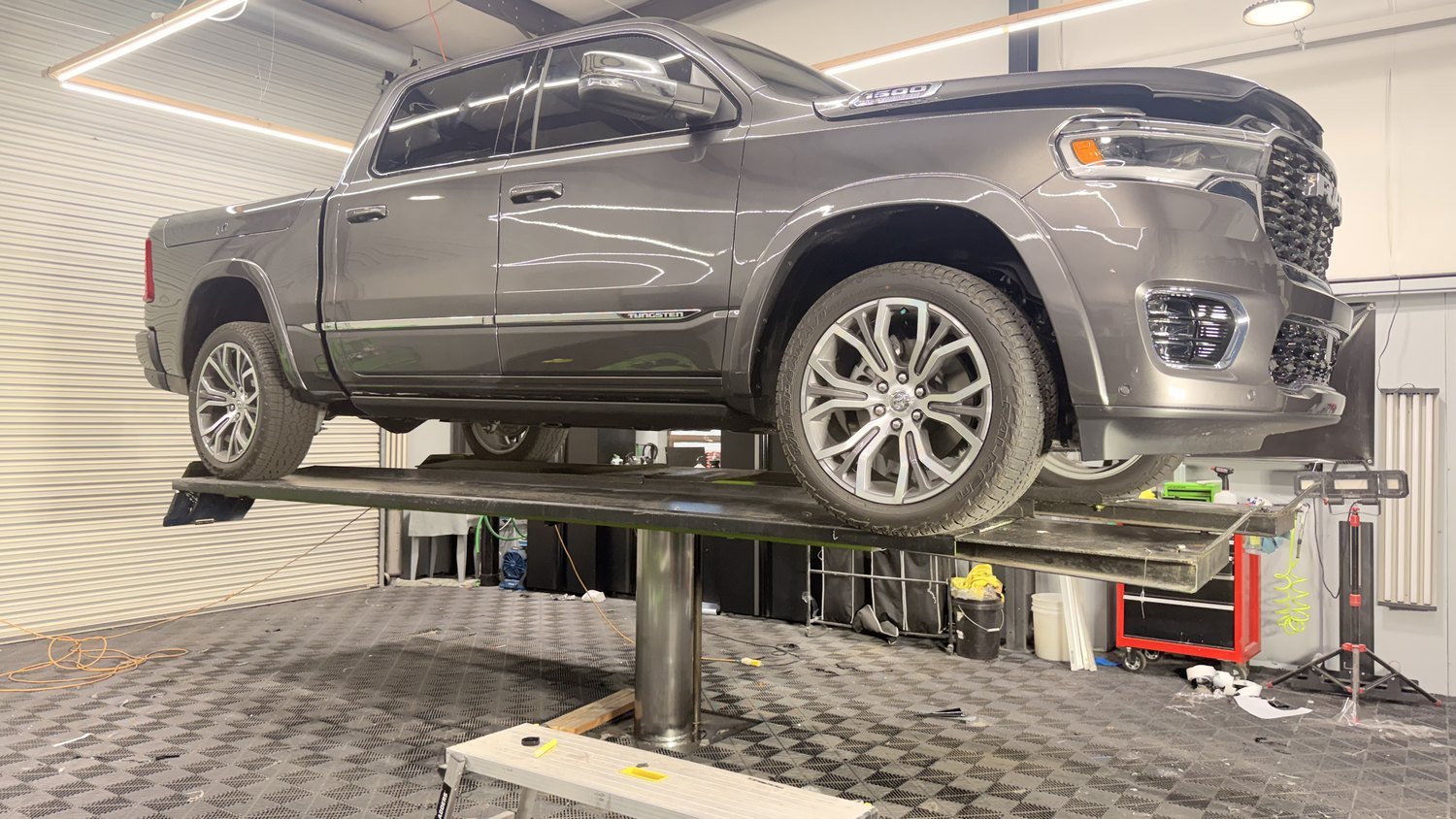
Done from the floor, that bottom edge is worked by feel — you're reaching under a panel you can't see. On the lift it's at eye level with the same light as everything else, so it gets finished rather than approximated.
Same goes for rockers, valances and behind the wheels. Worth asking whoever quotes you whether they've got a lift — not whether the bumper's included, but how they reach it.

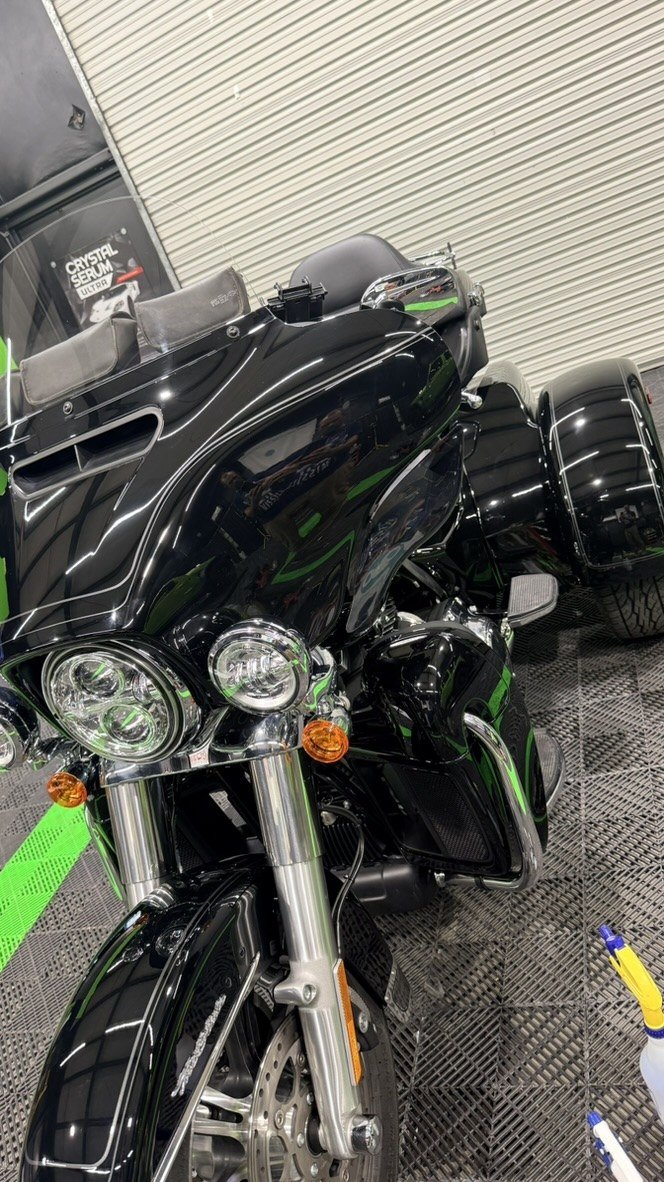
On a car, the bumper takes the hit and the paint you care about sits behind it. A motorcycle has nothing in front — the fairing, the tank and the front fender are the leading edge, taking everything the road throws up at full speed.
Bike paint is also expensive to fix. Anything with candy, metalflake or factory graphics means matching a finish that was never simple, and a touring fairing is not a cheap panel.
Film goes on the leading edges: fairing nose and lowers, tank front and sides, front fender, and headlight where a stone would otherwise crack the lens. Trikes and baggers get the rear body work too, since there's a lot more of it to protect.
A car panel is broadly flat. A tank curves along two axes simultaneously, and a fairing nose curves in three. Getting film to lay flat on that without stretch marks or lifted edges takes patience, and it's why plenty of shops that install car film won't touch a bike.
Film matters more in this state than it does in most. Three reasons, all of them local.
I-10, US-60, the 202 and the 101 all carry loose rock, and Arizona's highway shoulders shed it constantly. Front ends here take hits that a car in a wetter, greener state simply never sees.
Dust storms drive fine grit at highway speed. One season won't ruin paint, but repeated exposure dulls and etches an unprotected clear coat over a few years.
Some of the highest UV exposure in the country, and most vehicles in the East Valley live in a driveway rather than a garage. Film's top coat adds a UV-resistant layer over the factory finish.
Appointment only, so your vehicle gets dedicated time rather than a slot between walk-ins.
We walk you through film and coverage options and give you an honest recommendation for your vehicle and how you drive.
Bring it in at your scheduled time. No waiting around, no uncertainty about when to show up.
Computer-cut on a Graphtec plotter, so no blade ever touches your paint. Cut and fitted in the shop, with Tyler on the install.
Drive it home the same day it's finished. Just skip the first wash for 7 days while everything cures.
We don't put a fixed number on it because every job is different — but if you serve or have served, we'll make sure you're taken care of. Just mention it when you reach out.
"I had Tyler do a track package PPF on my RS3 and it turned out incredible. Looks better than when I picked it up from the dealer. I could tell he is extremely detail-oriented and passionate about what he does."
Zac Rauschenberger
"Tyler installed PPF on the front of my Audi. Everything looks great and the cost was well worth it. I highly recommend taking your car to Tyler and Elite Auto Spa."
Sarah
"Besides being incredibly knowledgeable and talented, Tyler is a first responder, revealing a lot about this man's character. He was patient and talked to my limited level of understanding."
Timothy H. Gates
GSWF Defender Platinum on every job — self-healing, hydrophobic, up to 45% more gloss, and a lifetime manufacturer warranty registered in your name. Available in gloss, or satin for roughly 10% more. SVG colored film is a separate service for color changes, with a 10-year warranty.
No — and this catches people out. Film warranties cover manufacturing defects: yellowing, cracking, blistering, delamination. Not impact. If a rock gouges your film, that's the film doing its job, not failing. Replacing a section is normal service and a far better outcome than a repaint. Standard across every PPF brand. Full detail on our warranty page.
Sometimes, yes — and any installer promising none on a full wrap isn't being straight with you. Seams are a normal part of film, especially on larger coverage. We minimize them with computer-cut patterns and edge-wrapping. In hard sun at certain angles, particularly on darker paint, you may catch a film edge. Day to day, most people never notice.
Clear film is designed to be invisible, which means there's no dramatic after photo — the car looks like the car, just protected. That's the point of it. If you want a visible change, that's what colored film is for. The proof on clear film isn't how it looks the day you pick it up; it's the bumper further up this page.
Most installs finish within 1–2 days. Drop off at your appointment, pick up when it's ready, drive it home the same day. Just skip the first wash for 7 days while everything cures.
Wait 7 days, then hand wash with pH-neutral soap. Avoid brush car washes. Keep a pressure washer at least 12 inches from film edges. The self-healing top coat handles light wash swirls on its own.
We're in San Tan Valley and install film for customers across the East Valley and Pinal County.
He will tell you what your vehicle actually needs before you drive out. No pressure, no upsell.